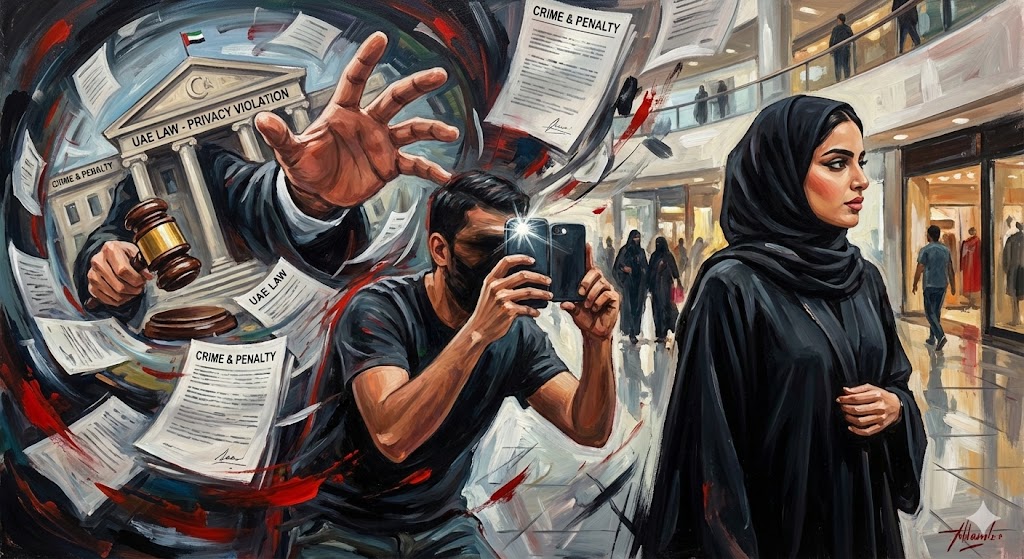
Privacy of Images and Personal Data in the United Arab Emirates
Legal Consequences of Publishing Images or Violating Privacy Without Consent
In an era dominated by smartphones and social media platforms, the privacy of images and personal data has become one of the most frequently violated fundamental rights. Many people mistakenly believe that keeping a photo or forwarding it is a harmless act. In reality, UAE law treats violations of privacy with the utmost seriousness and severity, classifying them as criminal offenses subject to strict penalties—particularly when such violations involve women, due to the profound psychological and social harm they may cause.
Based on extensive practical experience and cases brought before the courts, it is evident that a significant proportion of these crimes occur as a result of ignorance of the law rather than malicious intent. Nevertheless, such lack of awareness does not exempt individuals from serious criminal liability or the severe consequences of their actions.
What Constitutes a Violation of Privacy Under UAE Law?
Legally, a violation of privacy refers to any infringement upon an individual’s private life without their consent, using any technological means. This includes, but is not limited to:
-
Photographing a person without their knowledge or consent in a manner that infringes upon their privacy
-
Publishing or re-publishing private photos or videos without explicit authorization
-
Circulating or retaining private content with the intent to harm, insult, or threaten
-
Disclosing private conversations, personal data, or confidential information without the owner’s consent
UAE legislators afford special protection to women in this regard, recognizing the heightened sensitivity and severe social, psychological, and professional consequences that may result from violations of their privacy.
Legal Framework Governing the Protection of Images and Data in the UAE
First: Federal Decree-Law on Combating Rumors and Cybercrimes
Federal Decree-Law No. (34) of 2021 on Combating Rumors and Cybercrimes criminalizes any infringement of an individual’s privacy through technological means.
Under Article (44) of the law, any person who violates the privacy of another individual shall be subject to imprisonment and/or a fine if they commit any of the following acts:
-
Publishing or re-publishing photos, videos, or private information without consent
-
Photographing a person in a private place or in a situation that violates their privacy without approval
-
Disclosing or circulating private content—even if accurate—where such disclosure causes harm to the individual concerned
❗ Notably, this constitutes a criminal offense even if the image was previously shared with consent, or if there was no intention to defame. The decisive factor under the law is the absence of explicit permission for publication or circulation.
Second: Criminalization of Unauthorized Photography
The law does not always require actual publication for a crime to be established. Unauthorized photography alone may constitute a criminal offense if it occurs in a context that violates privacy or personal life. Each case is assessed based on its specific circumstances and at the discretion of the competent court.
Third: Personal Data Protection Law
In addition to cybercrime legislation, Federal Decree-Law No. (45) of 2021 on the Protection of Personal Data regulates the collection, processing, and sharing of personal data, including images and digital content.
The law mandates obtaining prior and explicit consent for the processing or sharing of personal data and grants affected individuals the right to:
-
Request the deletion of their data or cessation of its use
-
Object to any unlawful data processing
-
Seek legal accountability and compensation for damages suffered
What Are the Prescribed Legal Penalties?
Penalties vary depending on the nature and severity of the offense and may include:
-
Imprisonment for periods that may extend to several years
-
Substantial financial fines
-
Enhanced penalties in cases involving threats, blackmail, or repeated offenses
UAE courts handle such cases with the highest level of seriousness, particularly where the act has caused harm to the victim’s reputation, dignity, or psychological well-being.
Women’s Rights in Cases of Privacy Violations
UAE law guarantees women a clear and comprehensive set of rights, including:
-
Filing a criminal complaint against the perpetrator without exception
-
Requesting the immediate removal of unlawful content and cessation of publication
-
Claiming civil compensation for moral and psychological damages
-
Receiving full legal protection against threats or blackmail
No justification for violating privacy is recognized by law—even if the offender is a former spouse or a close acquaintance.
Common Mistakes That Lead to Criminal Liability
Among the most frequent actions that result in legal prosecution are:
-
Believing that possession of a photo grants the right to publish it
-
Forwarding images or videos “as a joke”
-
Retaining private images after the end of a relationship
-
Threatening to publish content, even if publication does not ultimately occur
All of the above may constitute criminal offenses under applicable UAE laws.
Legal Advice from Khalid Kalander Al Mazmi Advocates & Legal Consultants
To safeguard your rights and avoid legal liability, we advise the following:
-
Do not photograph anyone without their explicit consent
-
Refrain from publishing or circulating private content
-
Delete private images or videos immediately once their purpose has ended
-
Seek legal counsel promptly if subjected to threats or blackmail
-
Never ignore or tolerate any violation of privacy
Timely and proper legal action can prevent serious legal consequences.
Conclusion: A Legal Consultation That Protects You
Privacy violations and cybercrime cases are among the most serious legal matters under UAE law, given their long-lasting legal, psychological, and social repercussions.